Shockwave Therapy — Non-Invasive Relief for Stubborn Tendons
Radial shockwave delivers focused acoustic pulses into the tissue that's been hurting for months. No surgery, no injections, no downtime — just six in-office sessions for chronic tendon and fascia pain that hasn't responded to rest or stretching.
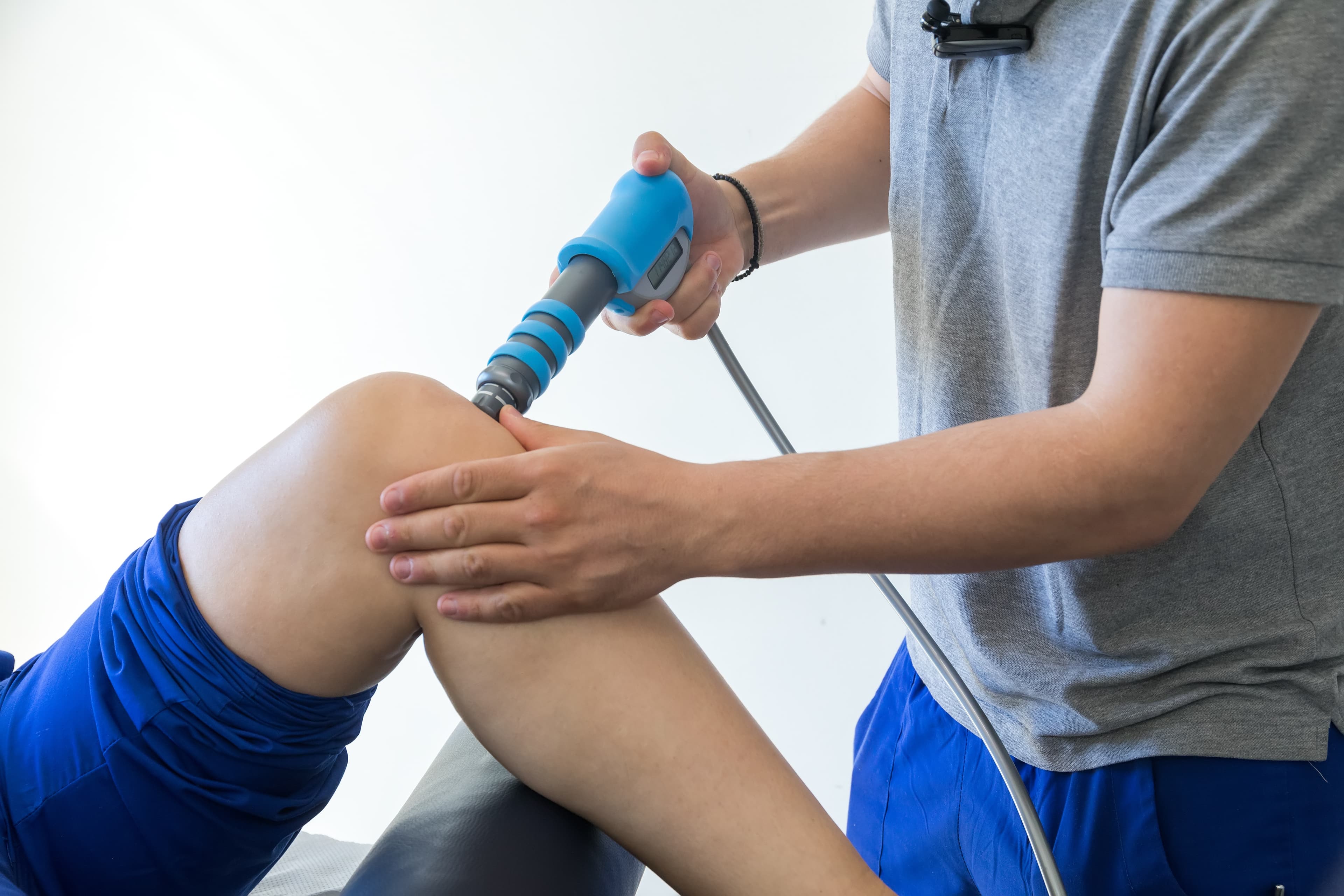
What Shockwave Therapy Is
Radial shockwave is a non-invasive treatment that uses acoustic pressure waves applied to the skin over an injured area. The pulses penetrate the tissue, breaking up scar adhesions and triggering an increase in blood flow that supports healing. It's been used in Europe for decades and has become a go-to modality in the U.S. for chronic plantar fasciitis, calcific tendinitis, and stubborn tendon pain that physical modalities and rest haven't resolved.
Conditions We Treat
Shockwave Therapy is most effective for these conditions. If you're unsure whether it fits your situation, that's what the evaluation is for.
- Plantar fasciitis
- Achilles tendinopathy
- Calcific shoulder tendinitis
- Tennis elbow (chronic, treatment-resistant)
- Patellar tendinopathy (jumper's knee)
- Chronic muscle trigger points and myofascial pain
Radial Shockwave
We use radial shockwave technology — pressure waves delivered through a handpiece pressed against the skin over the affected area. Radial waves disperse over a broader treatment zone, which is well-suited for fascial and tendon conditions like plantar fasciitis. Treatment is delivered in our Ormond Beach office in short, focused sessions.
What to Expect
- 1
Evaluation
We confirm shockwave is the right fit for your specific condition. It's most effective for chronic conditions (typically lasting 3+ months) that haven't responded to standard rest, stretching, or anti-inflammatories.
- 2
First Session
A water-based gel is applied to the treatment area and the shockwave handpiece is moved across it, delivering acoustic pulses. Sessions typically last 10–15 minutes per area. Some patients find the first session uncomfortable; intensity is adjusted to your tolerance.
- 3
Course of Treatment
A standard course is six sessions, typically once per week. Each session is short and you walk in and out under your own power.
- 4
Progress Tracking
We measure pain and function before treatment and at intervals during the course so we can tell whether shockwave is working — and adjust the plan if it isn't.
The Practical Stuff
Number of sessions
A standard course is six sessions, typically once per week. Some conditions improve in fewer sessions; some need a brief booster series later.
Downtime
No downtime. You can resume normal activity immediately. Some patients report mild soreness for a day after a session — similar to how a deep massage feels the next morning.
Insurance & cost
Shockwave therapy is not covered by insurance. We don't publish pricing online — cost is discussed openly during your evaluation. Care Credit financing is available.
Shockwave as Part of a Plan, Not a Standalone Fix
Shockwave works best when paired with the rest of what we do — therapeutic exercise to address the underlying mechanics, manual therapy when appropriate, and clear guidance on what activities to modify while the tissue heals. We don't sell shockwave as a one-and-done miracle. We sell it as a powerful tool inside a coordinated plan.
Common Questions
Does shockwave hurt?+
It's not gentle, but it's not unbearable either. Most patients describe it as a strong tapping sensation. We adjust the intensity to your tolerance, and most people find sessions easier as the tissue desensitizes.
How fast will I feel a difference?+
Many patients notice some improvement within 2–3 sessions. The full benefit usually shows up over the course of treatment and the weeks following. Chronic conditions often improve gradually rather than all at once.
Is there downtime?+
No. You can return to normal activity immediately. We may suggest avoiding high-impact loading of the treated area for a day or so to let the tissue settle.
Will insurance cover it?+
No. Shockwave is considered an elective modality and is not covered by insurance. Care Credit is available if cost is a concern.
What if shockwave doesn't work?+
We track your progress visit-to-visit. If we're not seeing the improvement we expected by the midpoint of the course, we revisit the plan — sometimes the right move is more time, sometimes it's a different approach. We don't keep doing something that isn't working.
Related Care
Conditions we treat with this
Other services that pair with this
Book an Appointment
To schedule your appointment, kindly fill out the form below. Once submitted, our team will promptly contact you to confirm the details. For any questions, please don't hesitate to call us.
Contact & Locations
Main Phone
(386) 800-3100Office Hours
- Monday: 9 AM – 12 PM, 3 PM – 6 PM
- Tuesday: 3 PM – 6 PM
- Wednesday: 9 AM – 12 PM, 3 PM – 6 PM
- Thursday: 9 AM – 12 PM
- Friday: 9 AM – 12 PM, 3 PM – 6 PM