Peptide Therapy — Targeted Signals for Healing and Recovery
BPC-157, TB-500, and other peptide protocols to support tendon, ligament, and soft-tissue repair. Used standalone or alongside our regenerative injection therapies. Optional growth-hormone and metabolic peptide stacks available for patients with specific goals.
What Peptide Therapy Is
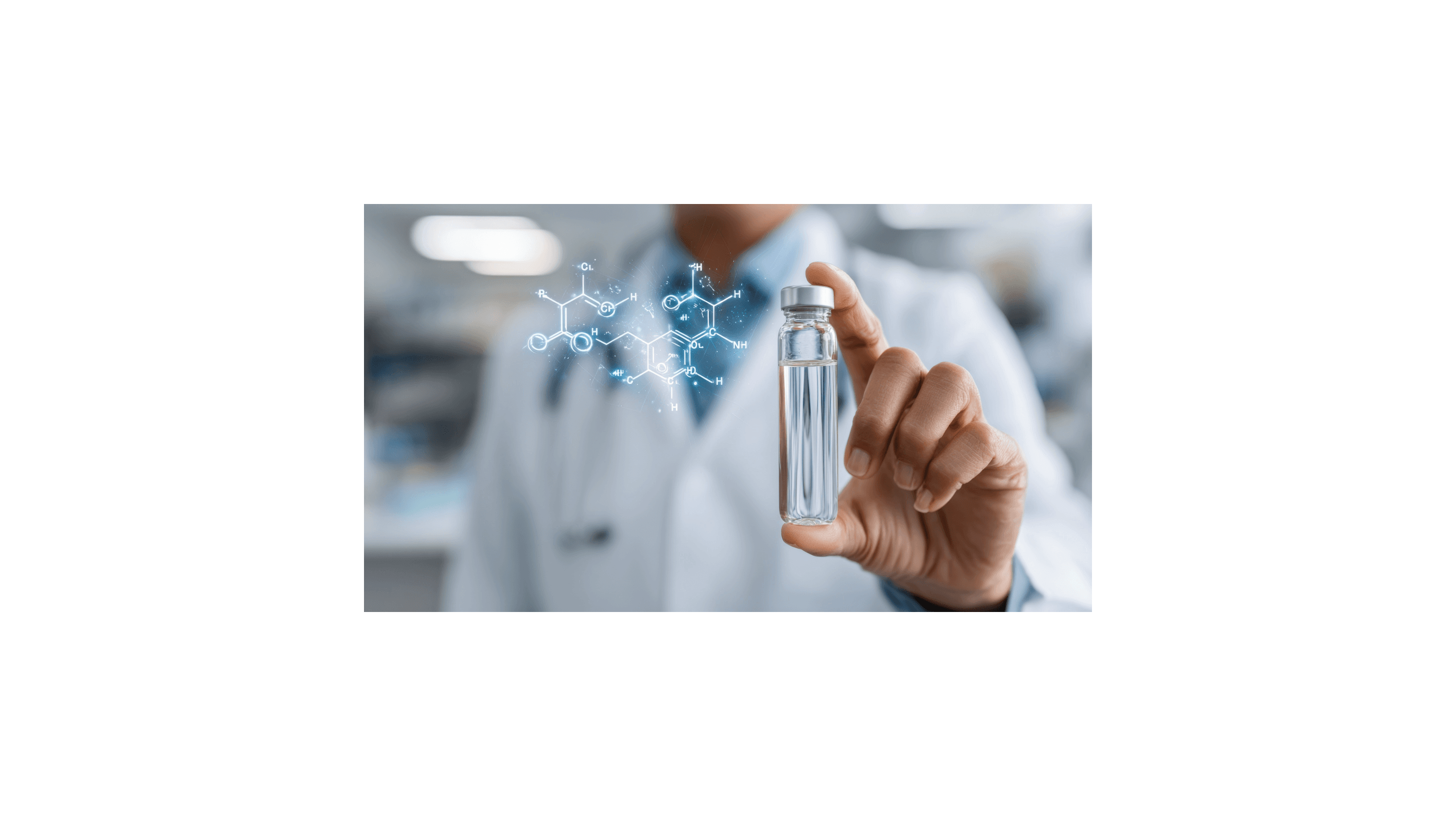
Peptides are short chains of amino acids that act as signaling molecules in the body. Specific peptides have been studied for their ability to support tissue repair, modulate inflammation, accelerate wound healing, and influence growth-hormone pathways. We use peptides primarily as a recovery and tissue-repair tool — most often to support healing in tendons, ligaments, and other soft tissue, sometimes as an adjunct to PRP or stem cell injections, and on request for patients with growth-hormone optimization or metabolic goals.
Conditions We Treat
Peptide Therapy is most effective for these conditions. If you're unsure whether it fits your situation, that's what the evaluation is for.
- Tendinitis and tendon repair (e.g. rotator cuff, Achilles, patellar)
- Ligament sprains and slow-healing soft-tissue injuries
- Post-injury and post-surgical recovery support
- Adjunct to PRP or stem cell injections for joint and tendon care
- Skin and tissue repair (glow stack protocol)
- Growth hormone optimization and metabolic protocols (on request)
The Peptides We Use
Our standard orthopedic protocol is BPC-157 — a peptide widely studied for its role in tendon, ligament, and gut repair — used standalone or paired with TB-500 (thymosin beta-4) for more substantial soft-tissue injuries. We also offer the glow stack for skin and tissue-repair goals. For patients with specific optimization goals, we can prescribe the CJC-1295 / Ipamorelin growth-hormone secretagogue stack or tesamorelin standalone. Peptides are administered as subcutaneous injections, typically self-administered at home over a defined course we plan with you.
What to Expect
- 1
Evaluation & Goal Setting
We start with what you're trying to accomplish — accelerated injury recovery, post-surgical healing, tissue repair, or a specific optimization goal. The right peptide depends on the right indication.
- 2
Custom Protocol
We design a protocol around your goal: which peptide(s), dosing, frequency, and course length. Most orthopedic protocols run 30–90 days; optimization protocols may run longer.
- 3
Education & Onboarding
We walk you through how to self-administer subcutaneous injections, where to inject, how to handle and store the peptide, and what to watch for. Self-administration is straightforward and most patients are comfortable after a single session.
- 4
The Course
You administer the peptide on the schedule we set. Most patients adapt to the routine quickly. We're available for questions throughout.
- 5
Follow-Up & Reassessment
We check in on progress, decide whether to extend, adjust, or stop, and integrate findings into your broader care plan.
The Practical Stuff
Number of sessions
Course length depends on the peptide and the goal. Most orthopedic protocols (BPC-157 alone or with TB-500) run 30–90 days. Optimization protocols (CJC/Ipamorelin, tesamorelin) typically run longer with periodic reassessment. Specific dosing is designed during your evaluation.
Downtime
None. Peptides are self-administered subcutaneous injections at home — typically once daily. Mild injection-site soreness is occasional and short-lived. No activity restrictions.
Insurance & cost
Peptide therapy is not covered by insurance. Cost varies by peptide and course length and is discussed openly during your evaluation. Care Credit financing is available.
Recovery-First, Not Anti-Aging-First
There are clinics that lead with peptides as an anti-aging tool. We don't. We use peptides primarily as a recovery and tissue-repair adjunct — most often for orthopedic injuries, often paired with PRP or stem cell injections so the peptides support what the injection started. We're upfront about what's clinically established vs. what's emerging, and we don't recommend peptides to a patient whose goal would be better served by something else.
Common Questions
What conditions do you typically use peptides for?+
Most often: tendon and ligament injuries, post-injury recovery, and as an adjunct to regenerative injections for joint and soft-tissue care. We also offer skin and tissue-repair protocols and growth-hormone or metabolic optimization stacks on request.
How are peptides administered?+
Most peptides we use are self-administered as small subcutaneous injections at home, typically daily. We teach you the technique during your first visit and you'll be comfortable after a session or two.
Are peptides FDA-approved?+
It depends on the specific peptide. Some, like tesamorelin, are FDA-approved for specific indications. Others, like BPC-157 and TB-500, are not FDA-approved drugs and are prescribed through licensed compounding pharmacies under specific conditions. We're upfront about the regulatory framework during your evaluation so you understand exactly what you're getting.
Are peptides safe?+
When prescribed and dosed appropriately, the peptides we use have generally favorable safety profiles in clinical and research settings. We screen for contraindications during your evaluation and we don't prescribe peptides without a real reason. As with anything, individual response varies — we discuss specifics openly.
How long is a typical course?+
For orthopedic injuries, 30–90 days is typical. Optimization protocols (growth hormone, metabolic) often run longer with reassessment. Course length is designed around your specific goal.
Will insurance cover it?+
No. Peptide therapy is not covered by insurance. Care Credit financing is available if cost is a concern.
Do I need to come into the office for every dose?+
No. After the initial evaluation and onboarding, you self-administer at home. We follow up at intervals during the course to assess progress.
Related Care
Conditions we treat with this
Other services that pair with this
Book an Appointment
To schedule your appointment, kindly fill out the form below. Once submitted, our team will promptly contact you to confirm the details. For any questions, please don't hesitate to call us.
Contact & Locations
Main Phone
(386) 800-3100Office Hours
- Monday: 9 AM – 12 PM, 3 PM – 6 PM
- Tuesday: 3 PM – 6 PM
- Wednesday: 9 AM – 12 PM, 3 PM – 6 PM
- Thursday: 9 AM – 12 PM
- Friday: 9 AM – 12 PM, 3 PM – 6 PM