Been Told You're "Bone on Bone"? What That Actually Means for Your Knee
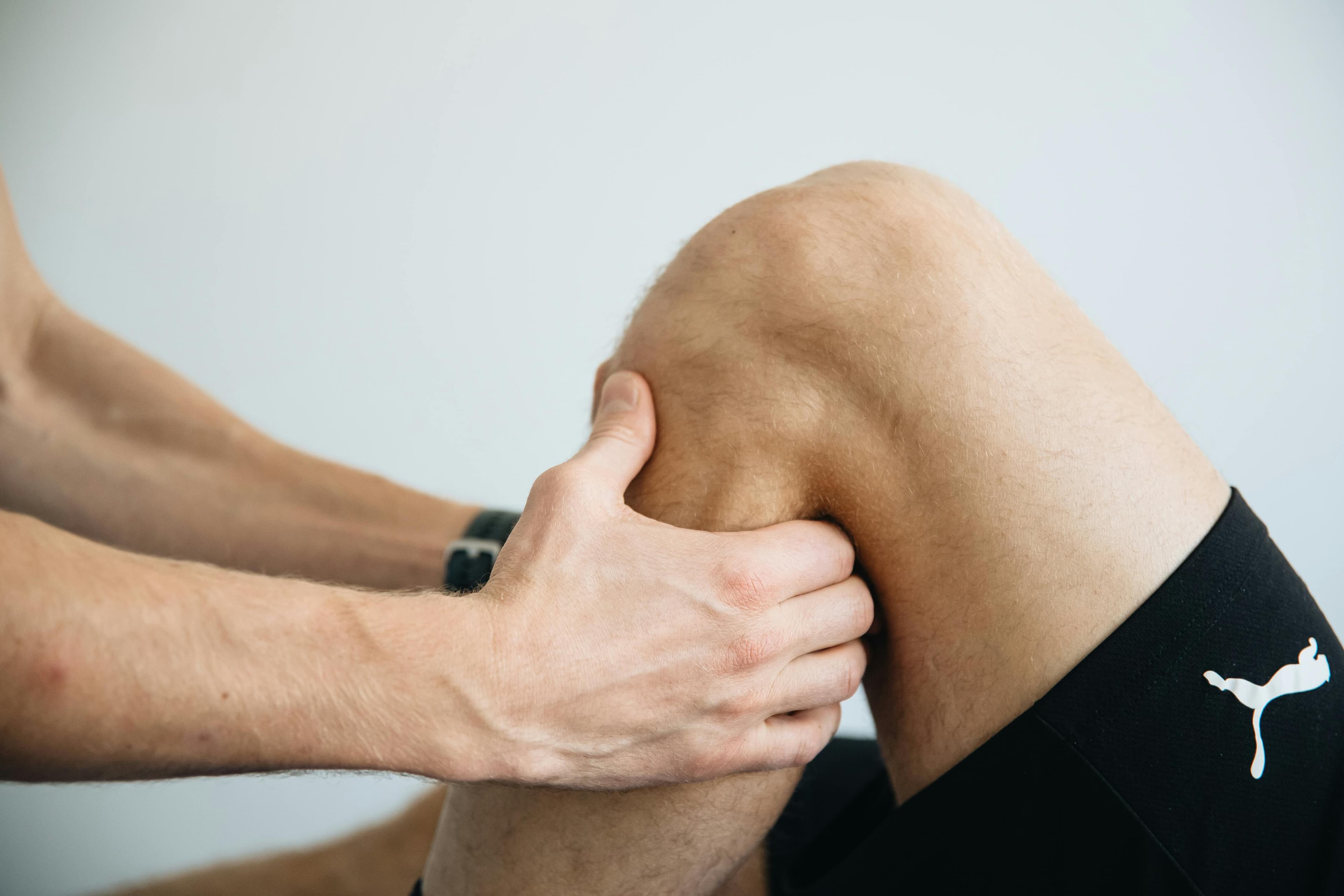
If a provider has looked at your X-ray and told you your knee is "bone on bone," odds are you left that appointment thinking the only road forward was a knee replacement. That's the script most patients hear — and it isn't the full picture.
Here's what the phrase actually means, what your imaging is (and isn't) saying about your future, and what options exist between "live with it" and "replace it."
What "bone on bone" actually means
In a healthy knee, the ends of your femur and tibia are capped with cartilage — a smooth, slippery layer that lets the joint glide without friction. Over years of use, and especially with prior injury, that cartilage wears thin. When an X-ray shows the gap between those two bones has narrowed or closed, providers call it "bone on bone."
A few things worth knowing:
- X-rays don't show cartilage directly. What they show is the space cartilage occupies. When the space looks gone on film, it usually means significant wear — but it doesn't tell us everything about the inflammation, the surrounding soft tissue, or how much functional cartilage is still doing work.
- Pain and imaging don't always match. Plenty of patients with dramatic-looking X-rays walk in with manageable pain. Plenty of patients with mild-looking imaging are in real distress. Pain comes from inflammation, muscle guarding, and soft-tissue irritation as much as from the cartilage itself.
- "Bone on bone" is a description, not a prognosis. It describes what the film shows today. It does not dictate that surgery is the next step.
A clinical note from years of seeing knees: the patients I've examined who are truly end-stage bone-on-bone have a hard time with two specific things — walking any real distance, and getting up from a seated position. If you can still walk through most of your day and rise out of a chair without bracing yourself on the armrests, your knee almost certainly has more life left in it than the X-ray is telling you.
Why surgery isn't the only path
Total knee replacement is a real tool for the right patient. But it's a major surgery with a long recovery, real risks, and a finite lifespan — most implants are quoted at 15–20 years. That calculation looks different if you're 72 than if you're 55.
Between "tough it out" and "replace the joint," there's a whole middle tier:
- Calm the inflammation. Most "bone on bone" knees hurt more than the cartilage wear alone would predict, because the joint is chronically inflamed. Bringing that inflammation down often produces a bigger pain drop than patients expect.
- Protect what cartilage you still have. Even a knee that looks bad on film usually has some cartilage left. Slowing further breakdown buys time.
- Rebuild the support system. The muscles and soft tissue around the knee take a lot of load off the joint itself. Strength and mobility work, guided by a qualified provider, is one of the single most effective things you can do — and it's routinely underprescribed.
What we can do here
At our Ormond Beach clinic we work through a layered, non-surgical approach before anyone talks about replacement:
- Full evaluation. A chiropractor or nurse practitioner reviews your imaging, your history, and your goals. If we need better imaging than what you have, we'll send you out for it before we treat anything.
- Therapeutic exercise. Targeted mobility and strengthening work to rebuild the support structure around the joint.
- Regenerative injections where appropriate. PRP (platelet-rich plasma) to signal repair. A2M (alpha-2-macroglobulin) to slow the enzymes that break down cartilage. In some cases, stem cell therapy. These come from your own blood or tissue and target the underlying problem rather than just masking the pain. (More on how A2M works here.)
- Coordination with a surgeon when the time comes. Some knees do eventually need replacement. Our job is to make sure you've exhausted the reasonable alternatives first — and that if you do go to surgery, the surrounding tissue is as strong as we can make it.
Who's a good candidate for the non-surgical approach
- You've been told you're bone on bone but you're not yet sold on replacement.
- Your pain is changing your daily life — walking, sleeping, pickleball, golf, grandkids — and you want that life back.
- You've tried NSAIDs, rest, or cortisone with diminishing returns.
- You'd rather try something that targets the joint itself before signing up for major surgery.
Patients with end-stage bone-on-bone disease, severe deformity, or mechanical locking often do need surgery — and we'll tell you that honestly if we see it. The goal is to give you the real options, not pretend the knife doesn't exist.
What to do next
If "bone on bone" is the only thing you've been told about your knee, you've only heard half the story. See our full knee pain treatment approach or request an evaluation directly — either way, we'll walk through your imaging with you, talk through what's realistic, and lay out a plan. Surgery or not.
It's a 15-minute conversation that could change the next ten years of how your knee feels.